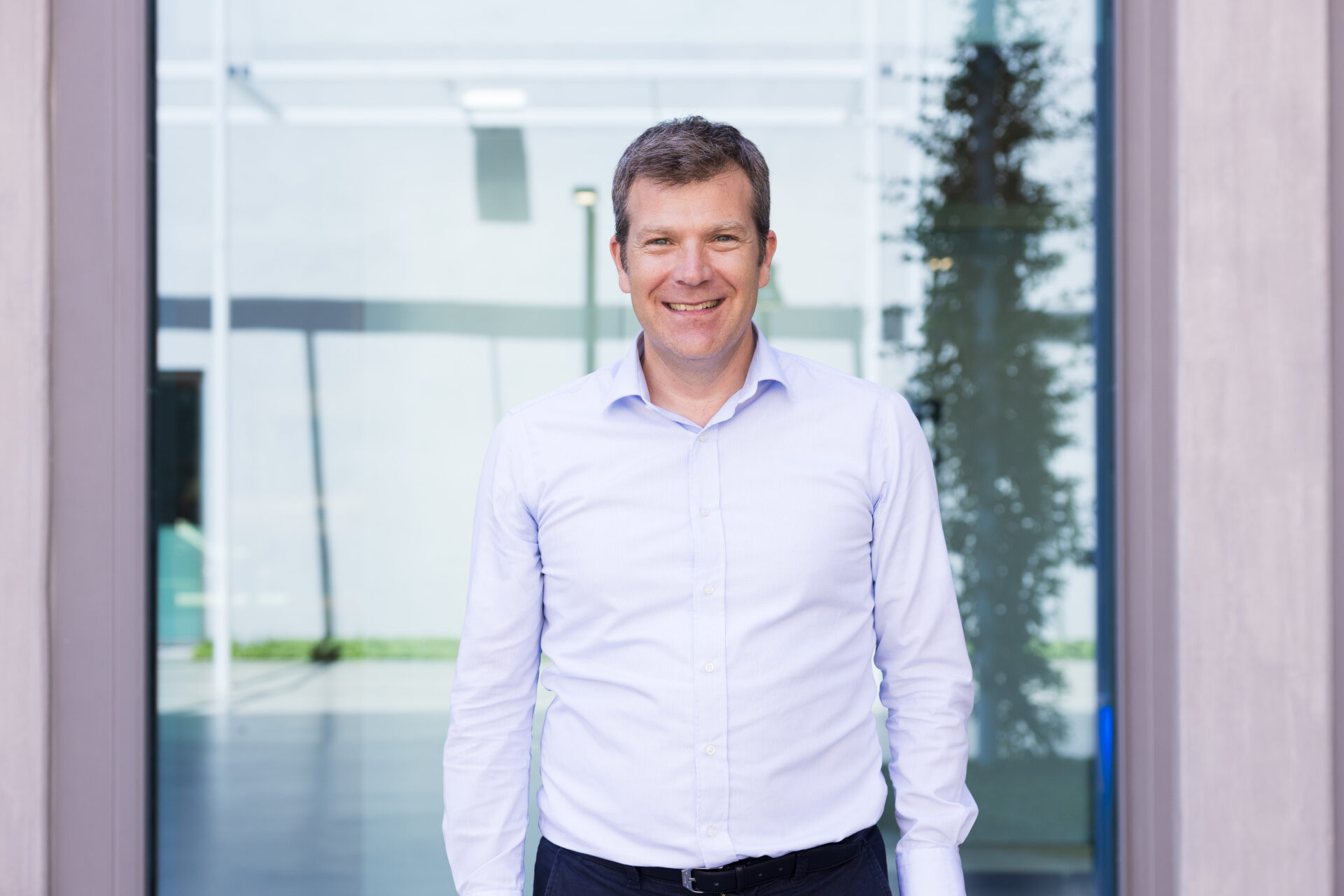
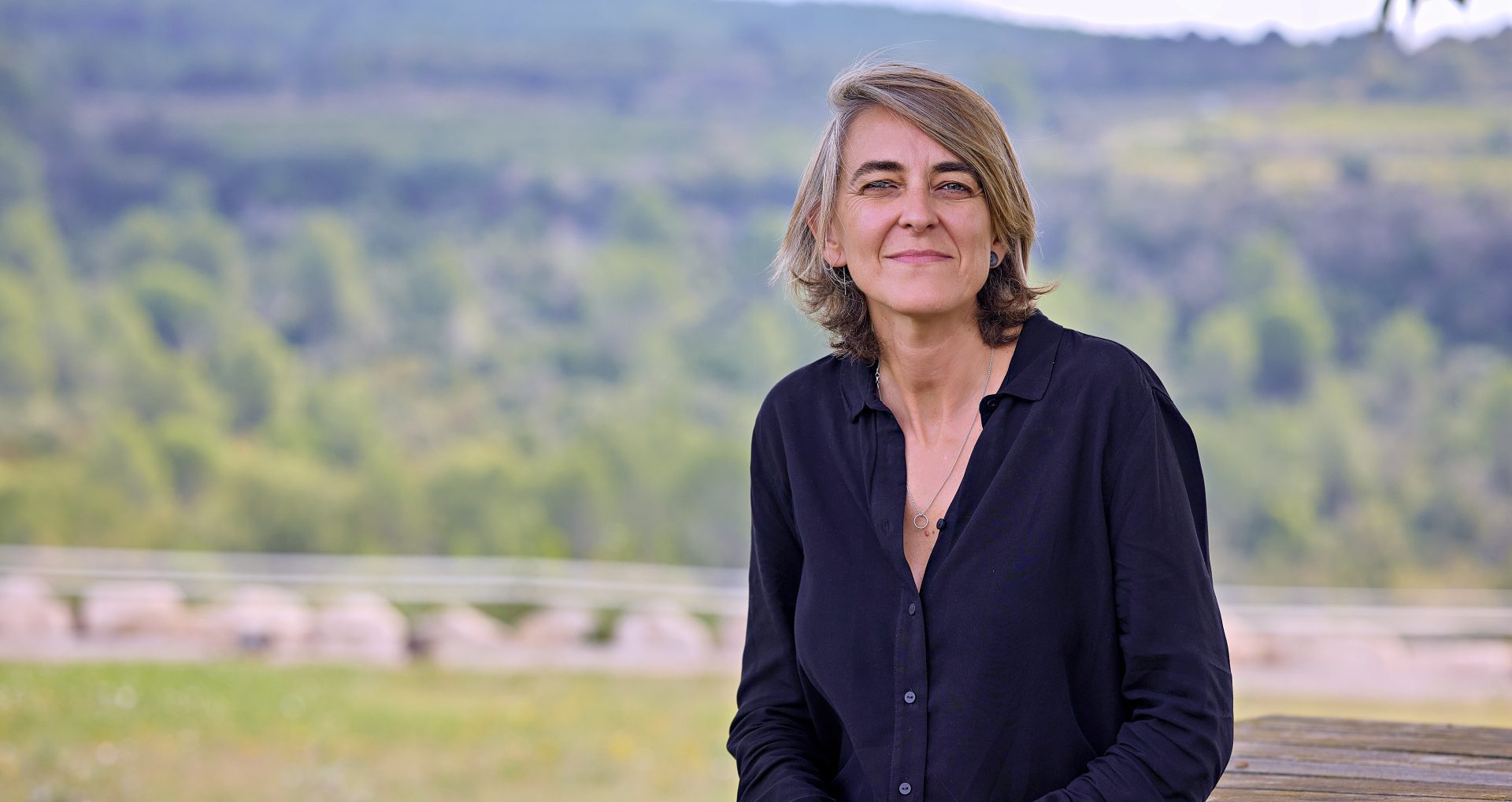
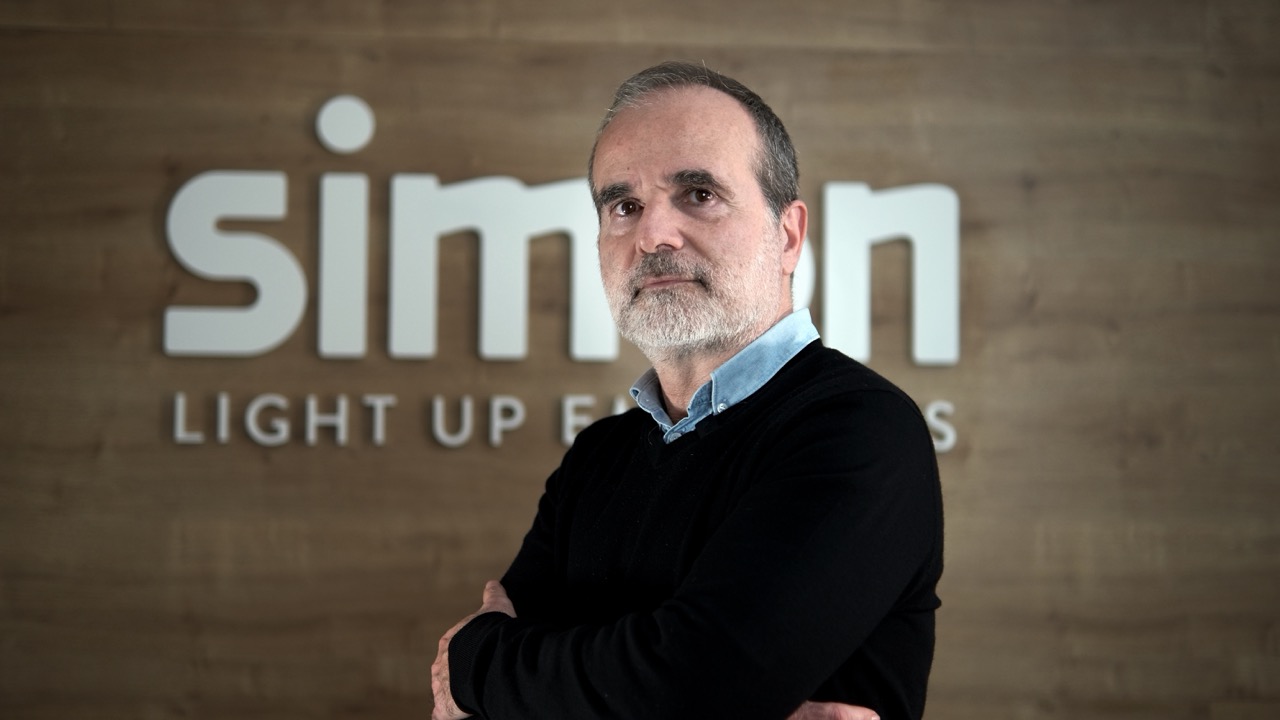
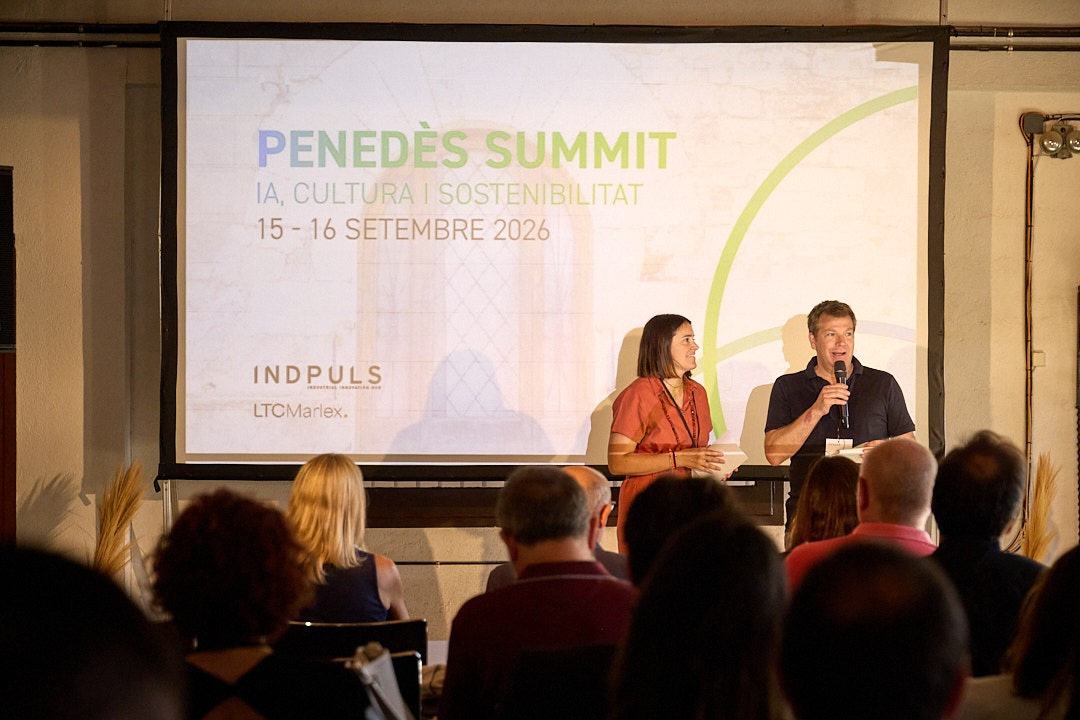
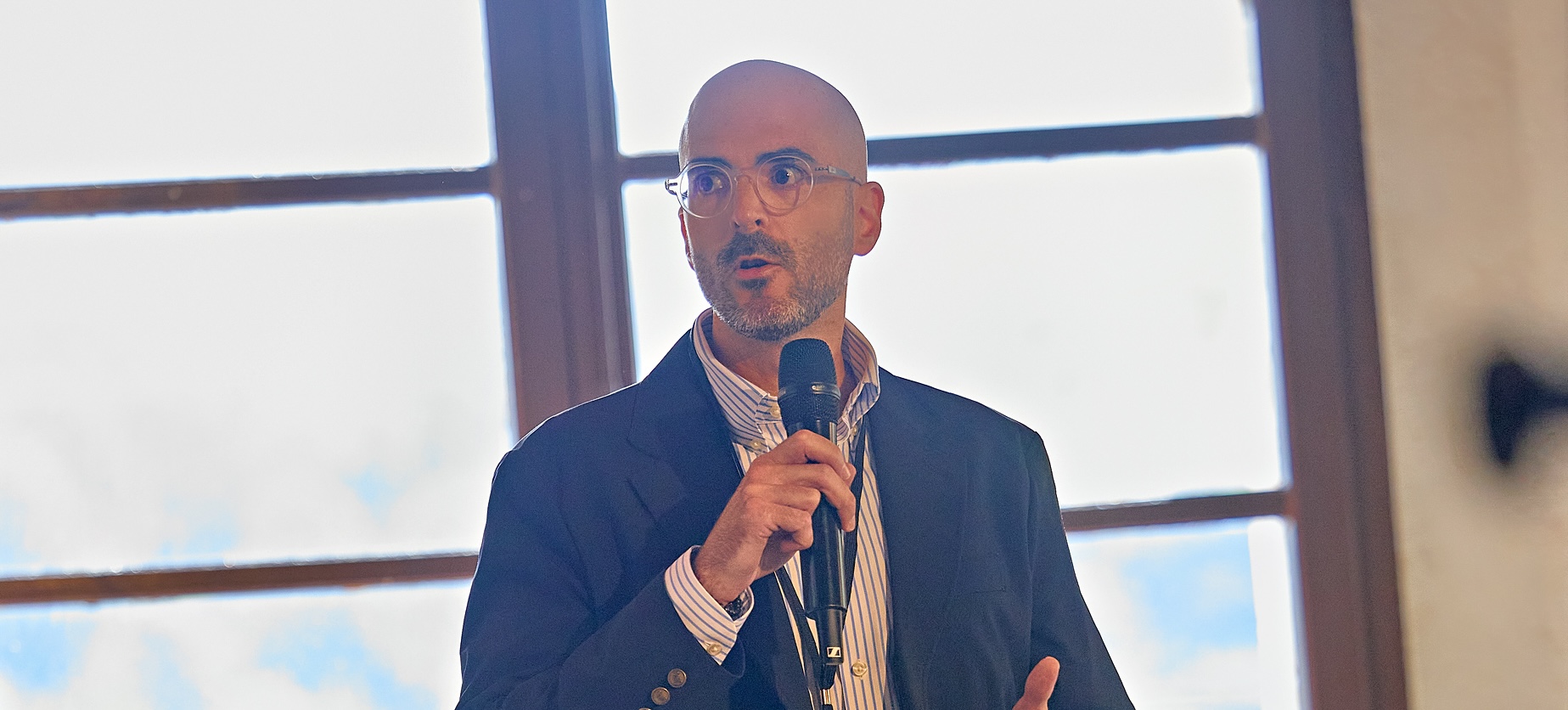
We talk to Joan Vilaseca, Sustainability Officer at Girbau
Girbau, a company specialising in industrial and professional laundry solutions and a founding member of INDPULS.
Industry faces the challenge of reducing its environmental impact without losing competitiveness. In this context, sustainability and innovation are increasingly going hand in hand: managing resources better, reducing consumption, rethinking products and processes, and developing new solutions are environmental challenges, but also opportunities to transform industry.
At Girbau, sustainability and innovation are part of the same outlook on the future of the business: advancing in efficiency, decarbonisation and circularity, and bringing these challenges into the development of products, services and new models.
At INDPULS, we talk with Joan Vilaseca about how to connect sustainability and innovation, the role technology and design play in reducing environmental impact, and how collaboration between companies can accelerate a more efficient, competitive and future-ready industry.
1. Sustainability and innovation are increasingly connected concepts in industry. How does this relationship play out in a company like Girbau, and in the decisions you make about products, processes and business?
At Girbau, we don’t see sustainability and innovation as two separate conversations. They are an inseparable pair: we can’t innovate for a world that no longer exists.
The context has changed. We have already crossed seven of the nine planetary boundaries, and industry will face shortages of energy and water, difficult access to certain critical raw materials, price volatility, new regulatory requirements and the need to adapt to climate change. So the question is no longer just how we produce better, but what we need to redesign in order to stay competitive in a world with more constraints and fewer available resources.
This vision connects us with Girbau’s purpose: to be a benchmark in creating a positive impact on people and the planet. Our sustainability strategy works across five areas: climate, water, pollution, social impact and governance. And it does so along two lines.
The first is internal: we reduce the direct impacts of our operations. The second is outward-facing: we use the multiplier effect of our business to reduce the impact of our products at the customer’s site and across the whole value chain.
This translates into products that are more efficient, durable and repairable; processes that use less water, energy and chemicals; and solutions that reduce both the environmental impact and the operating costs of the customer.
When sustainability improves operations (both our own and our customers’), it stops being merely an environmental responsibility. It becomes value, resilience, differentiation and competitiveness.
2. Water and energy are two critical resources in the professional laundry sector. What innovation challenges arise from reducing their consumption while maintaining the efficiency and quality of the process?
In 1959, Herbert Sinner defined the four factors that determine washing effectiveness: time, temperature, mechanical action and chemistry. The principle is simple: if you reduce one, you normally have to increase another to maintain the same result.
This helps us understand how difficult the challenge is. If we lower the temperature to use less energy, or use less water, we can’t compensate indefinitely with more time, more chemicals or more mechanical action. We could make the process more expensive, lose productivity, degrade fabrics sooner, or simply shift the environmental impact from one resource to another.
That is why the innovation challenge isn’t just optimising the Sinner circle. It’s starting to break its limits.
Laundry processes have come a long way, but they haven’t yet experienced a true disruption. We still wash essentially with the same combination of water, heat, chemicals, movement and time.
The leap will come if we act on the whole system at once: water reuse, heat recovery, intelligent process control, biocompatible chemistry that works effectively at low temperatures, and new textiles that are more durable, easier to maintain, free of PFAS and other persistent chemicals, and that release fewer microplastics.
This requires equipment manufacturers, chemical companies, textile producers and laundries to innovate together. The next revolution won’t come only from a more efficient washing machine, but from a new textile treatment system.
3. A significant part of the environmental impact occurs while customers use the equipment. How does this shape the way you innovate and design new solutions?
This fact absolutely shapes how we innovate and how we approach sustainability. Approximately 96% of our carbon footprint is related to the use phase of our products at customers’ facilities over their entire lifetime. So our main impact doesn’t end when we sell a machine; it’s precisely when it begins.
This forces us to eco-innovate on two levels. The first is to build ecodesign into every product evolution. Each new generation must consume fewer resources during the use phase, last longer, and be easier to repair, maintain and upgrade. A seemingly small improvement, multiplied by thousands of machines running intensively for many years, creates an enormous impact.
But it’s not enough to make products that are more efficient than their predecessors or than the competition’s. That makes them relatively more sustainable, but not necessarily sustainable in absolute terms, because they still have negative impacts attached.
That is why we are also working on solutions closer to the “Net Positive” concept: technologies that complement other products and offset their negative impacts, so that in absolute terms they can be considered to have a positive impact. Examples include water recovery and reuse systems, energy recovery solutions, and filters that capture microfibres, such as microplastics, before they are released into the environment.
4. When we talk about a more sustainable industry, it’s not just about improving products, but also about rethinking processes and systems. Where do you think there is the most capacity for transformation today?
If I had to point to one specific area, I’d say there is still great capacity for transformation in direct production processes. The current state of the art and technology allows us to electrify processes, automate them, recover heat, reuse water, reduce waste and control resource consumption far more precisely.
But I think the most honest answer is that the capacity for transformation lies in practically everything we do. It does, however, require intentionality. That is the key.
Sustainability doesn’t depend only on how we manufacture a product. It also depends on how we design it, which materials we select, where they come from, how we transport them, how much energy the product consumes over its lifetime, how it will be used and its social impact, how long it lasts, whether it can be repaired or upgraded, and what we do with it when it no longer provides the service it was designed for.
Circularity is essential here. We have to move from a linear model, in which we extract resources, manufacture, sell and lose control over the product, to a model in which we preserve the value of equipment, components and materials for as long as possible.
This means designing for durability, repair, upgrading, disassembly, remanufacturing and, finally, material recovery. But it also means creating the services, reverse logistics, traceability and business models that allow us to keep control of those assets after the first sale.
Recovering a motor, an electronic board, a frequency drive or certain raw materials is not just an environmental decision. It’s a way to reduce dependence on volatile supply chains, protect ourselves against scarcity, and retain within the industrial system a value that today we often lose.
And finally, there is a less visible but essential transformation: the way decisions are made.
Sustainability isn’t just about generating less negative impact or waste. It’s about not losing control of the resources that the industry of the future will depend on to generate positive impact. It’s about doing business differently.
“If sustainability and circularity only come in at the end to validate a project, they arrive too late. They must be present from the start in decisions on innovation, purchasing, operations, investment and commercial strategy.”
5. Girbau’s international presence allows you to observe very diverse industrial realities. What differences do you see between markets in how they approach sustainability and innovation, and what can we learn from this global perspective?
Sustainability is global because it responds to a global reality: society’s challenges and the triple planetary crisis of climate, biodiversity and pollution. But demand is not global, because for the most part it is still an invisible, hidden cost.
There are markets where regulation and ESG criteria already shape investment. In others, they still carry secondary weight. And even within the same country, we can find customers with completely different levels of sensitivity.
But that doesn’t mean we should wait for everyone to share the same environmental or social conviction. A customer doesn’t need to want to save the planet or their neighbour in order to want to save money and ensure the continuity of their business.
Consuming less water, energy and chemicals reduces costs. Depending less on fossil fuels and scarce resources reduces risk. Anticipating regulation protects investment. This is a language that works more easily regardless of geography or the customer’s moral motivation.
The key is to adapt the narrative without changing the direction. In one market we will sell decarbonisation; in another, savings, productivity or resilience. But we can’t limit ourselves to passively following demand.
If we wait for every customer to ask for a solution, we are no longer leading. Sometimes you have to anticipate, invest before the need is obvious, and build the market. That is how a company positions itself and how an industry is transformed.
Moreover, this anticipation can create new business spaces. Textile recycling is a clear example: it starts from a social problem with an environmental impact, but it can become a new industry with technology, alliances, services and growth.
The global perspective teaches us two things: that we must speak the language of each market, and that we must not let the pace of the market limit the ambition of our purpose as a company.

6. Sustainability is one of the areas INDPULS wants to strengthen by activating initiatives with real transformative capacity. From Girbau’s experience, which challenges do you think industry can tackle better through collaboration between companies, and what can an ecosystem like INDPULS contribute to accelerate this transformation?
For many years, industry has been asked to reduce the harm it causes. Now we have to start asking ourselves whether we can also help repair it.
That is the ambition of a regenerative industry: not only reducing emissions, water use, waste and pollution, but also removing carbon from the atmosphere, recovering materials, regenerating soils, protecting biodiversity and strengthening the ecosystems and territories we depend on.
No company can make this transition alone. We need industrial symbiosis so that one company’s energy, water, materials or by-products become resources for another. We need open innovation so that scattered knowledge, technologies and capabilities can be combined to create new solutions. And we need ecosystems of trust that allow us to jointly take on risks that would be too high for any of us individually.
Biofix is a good example of this logic. Different INDPULS companies are joining forces to convert biomass into biochar, remove carbon from the atmosphere and generate high-quality certified credits. It’s not just about offsetting emissions. It’s about combining resources and capabilities to generate an impact that no single company could achieve on its own.
INDPULS is a place where shared challenges become shared projects: connecting complementary companies, facilitating pilots, providing scale and creating the conditions for innovation to reach the market.
Collaboration multiplies our capacity for impact. Going together allows us to go further, faster and better, and to tackle what would be unreachable alone.
The future doesn’t just call for a less negative industry. It calls for an industry capable of regenerating. And we can only build that industry together.
This interview is part of the INDPULSTALKS series, our space for conversation with the INDPULS community. We cover a range of topics related to the industrial sector, innovation, sustainability and management, among other relevant areas.
Similar Content