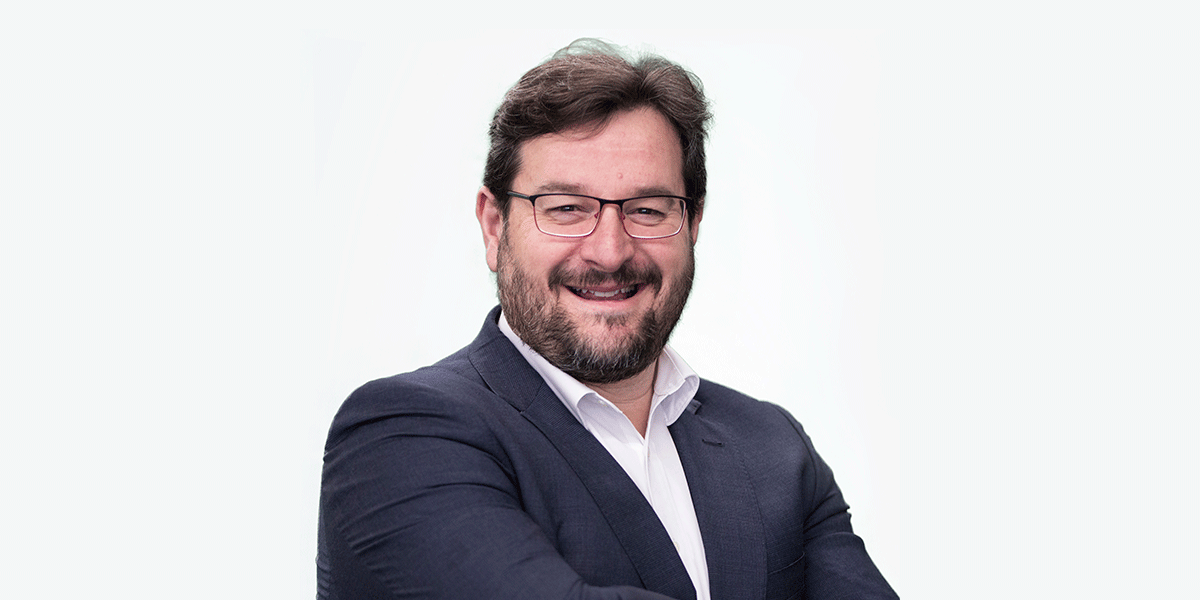
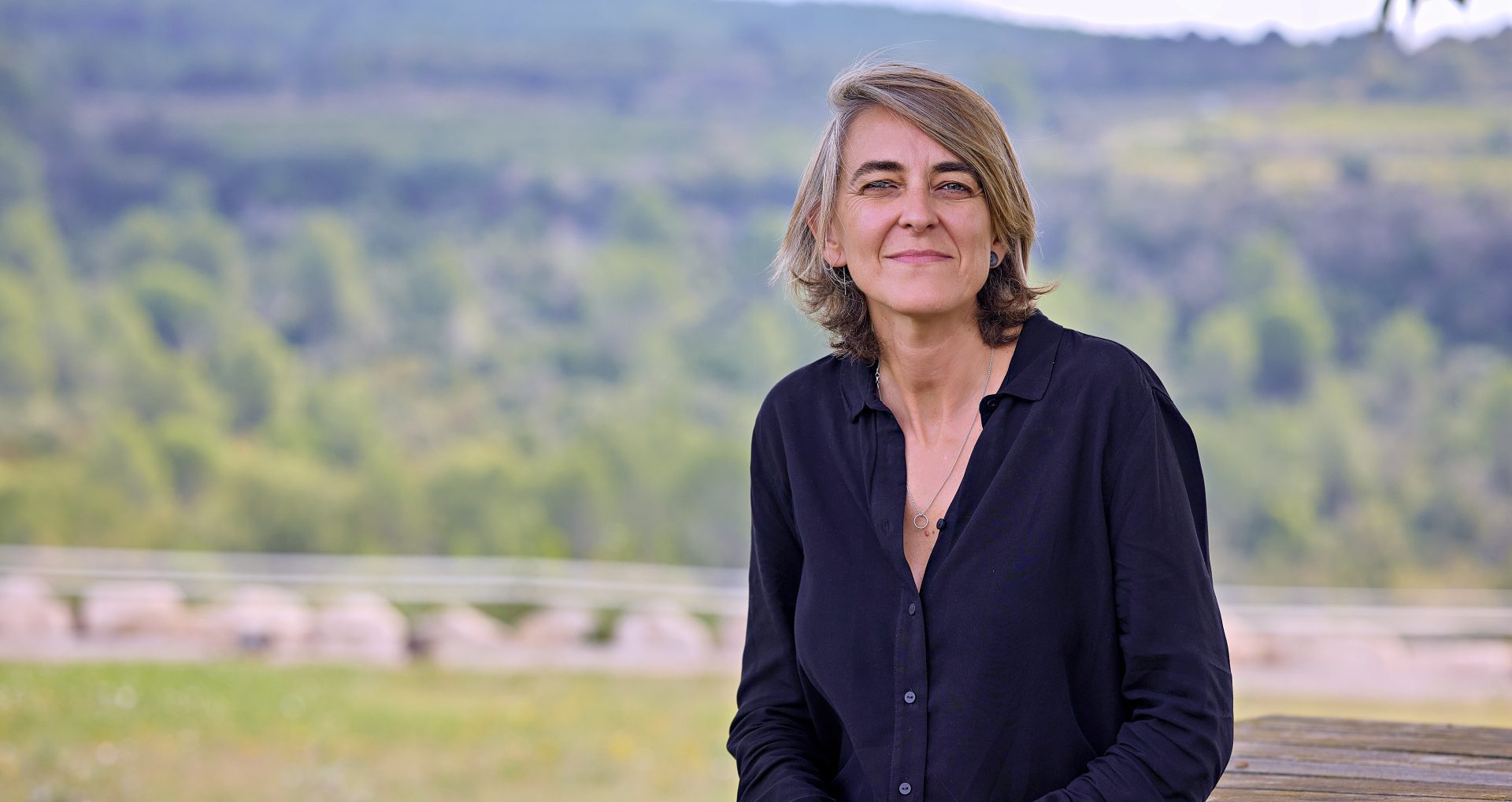
We speak with Carol Rius, CEO of BIOFIX LEGACY
Created by INDPULS partner companies, BIOFIX designed to develop a new industrial activity around biochar and biocarbon.
BIOFIX produces biochar from residual biomass and develops biocarbon-rich materials for applications in agriculture, construction and steelmaking. The goal is to replace fossil-origin carbon, bring biocarbon into new value chains and develop materials that contribute to industrial decarbonisation and strengthen climate resilience.
Carol Rius brings long international experience in the biochar sector to the spin-off. Before BIOFIX, she co-founded HUSK, with industrial operations in Southeast Asia, where she worked in production, application development, agriculture and carbon markets.
At INDPULS, we talk with her about the potential of biochar, the development of new materials and permanent carbon capture. We also discuss the role of industry and of collaboration between companies in turning a carbon capture technology into a new industrial value chain.
1. You have worked internationally in biochar and carbon capture for years. What have you learned from that experience, and what led you to drive BIOFIX now?
I have been working in biochar for eight years. The first thing I have learned is that the sector has overcome many of its initial challenges, which were mainly technological, and that we are now moving towards market challenges. Globally, biochar is still a very fragmented market.
I have also learned that, for industry to adopt it, biochar has to be a homogeneous material with stable properties. Without that homogeneity, it is not possible to scale up or to effectively replace fossil-origin carbon materials. And there is a vicious circle here: in a new market, you need to run trials with moderate investment, but that results in modest installed production capacity, and the lack of product available on the market in large volumes holds back industrial groups from introducing biochar into their value chains.
What led me to head BIOFIX is a sense of legacy aligned with its collaborative governance and with values I share. BIOFIX is an exceptional company, with a team of highly skilled, motivated and courageous professionals.
2. Biochar is still little known outside specialised circles. What exactly is it, and why do you think it has the potential to become a new industrial opportunity?
Biochar is a solid, carbon-rich material. It is obtained from residual agricultural or forestry biomass through a thermochemical process at high temperature and in the absence of oxygen. In this way, the carbon that plants have captured from the atmosphere is stably fixed for hundreds of years.
It is an industrial opportunity, first of all, because it reduces dependence on fossil fuels in sectors such as steelmaking or cement, which are part of the regulated emissions market. In these sectors, each tonne of fossil CO₂ costs between 85 and 90 euros. If, for example, anthracite is replaced with biochar from sustainable biomass, those emissions count as zero. For these industries, this means direct financial savings on CO₂ charges and a local alternative, as well as a real step forward in decarbonisation.
In addition, biochar has unique properties as a material. It is highly porous: a single gram of pine biochar can have about 300 m² of internal surface area, like a tennis court. This porosity allows it to filter, retain moisture and capture pollutants such as heavy metals, which makes it useful both for soil remediation and for climate resilience.
In agriculture, a high-quality biochar improves cation exchange capacity, so plants have greater access to nutrients. And because it retains fertilisers, whether organic or synthetic, it prevents them from leaching into aquifers and improves yields, which is very interesting for the fertiliser industry.
It also has applications in biodigesters: when added to anaerobic digestion, its porosity acts as a support for microorganisms, helps stabilise the process and buffer compounds such as ammonia, and can increase biogas production. Moreover, the resulting digestate contains biochar, which makes it a better fertiliser.
Finally, it is a very light material with an intense black colour, which can be used as a biocarbon pigment, for example in inks for compostable packaging.
3. BIOFIX does not want to stop at producing biochar, but to develop biocarbon-rich materials for specific uses. What does it mean to move from biochar as a raw material to developing materials for industry?
Moving from raw material to material means designing biochar for each application and delivering it ready to use. In steelmaking, for example, to replace anthracite in the furnace basket charge, biochar needs specific compaction, density and moisture. In agriculture, it has to be processed and mixed so that it goes from being a porous but inert material to one loaded with life and nutrients, and then granulated or pelletised so it can be applied with the same fertiliser-spreading machinery as always. And as a pigment, we need very high fineness and to turn it into polycarbonate pellets for the plastics industry.
“BIOFIX doesn’t simply sell biochar, but solutions tailored to each industrial process.”
4. You are working on applications in fields as different as agriculture, construction and steelmaking. What properties of biochar allow for this diversity of uses, and how is a material designed for a specific application developed?
What allows this diversity is, above all, the carbon content, which we can adjust. At BIOFIX we will produce biochars from 50% to 93% carbon. Those with the highest content, close to 93%, replace fossil carbon in steelmaking, where very pure carbon is needed. Those with lower content, with more minerals and a more active structure, suit agriculture and construction. Developing a material for a specific application means choosing the biomass carefully, controlling the process conditions to achieve the required carbon content and porosity, and then adapting the format to the customer.
BIOFIX brings together, in the same investor partners, the technical knowledge and the potential demand, both for biochar and for carbon credits. This greatly reduces the friction found in other biochar business models, which struggle to generate demand for their applications. In our case, the partners who have financed the project know exactly their technical needs for replacing materials and decarbonising their processes. That is why they are essential in customer-centred product innovation: our partners are our priority customers.
5. One of the project’s dimensions is permanent CO₂ capture. How does this mechanism work in the case of biochar, and what role can carbon markets play in the development of this new industry?
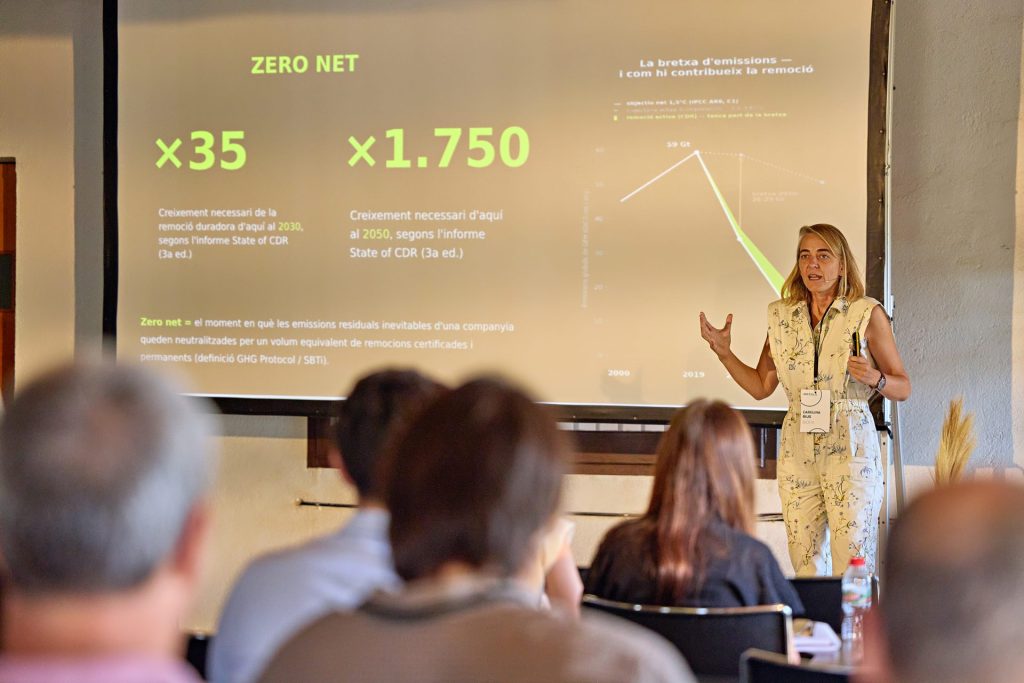
Plants capture CO₂ from the atmosphere as they grow. When that biomass decomposes or is burned, the carbon returns to the atmosphere. With the thermochemical process, however, that carbon is transformed into a very stable structure that lasts for hundreds of years. That is why we speak of permanent capture: each tonne of biochar can retain up to around three tonnes of CO₂, depending on its carbon content.
Carbon markets play a fundamental role, and they have a very clear rationale. Fossil fuels have an enormous global infrastructure, industrial processes optimised over decades and very low extraction costs. Projects like BIOFIX, still small by comparison, could not compete on material price alone. Carbon credits are the incentive we give ourselves on a global scale to make replacing fossil carbon economically viable.
That is why a credit is only certified if it meets the principle of additionality, that is, if that carbon capture would not exist without the incentive of the credit. At BIOFIX we will generate carbon removal credits with biochar, aligned with the European framework for the certification of carbon removals, the European Commission’s Carbon Removal Certification Framework, which guarantees the quality and rigour of the credits. Without carbon credits, it would not be possible to compete in the market today. With them, we can build a new industry that, over time, gains scale and competitiveness on its own.
In addition, our partners have priority in purchasing these credits, and some are already reserving those we will generate in the future in order to integrate them into their value chains and advance their decarbonisation.
6. BIOFIX was born with the participation and knowledge of different companies in the INDPULS ecosystem. What has working with industrial companies from the start, and testing technologies, processes and possible applications with them, brought to the project?
Working with industrial companies from the start has allowed us to reduce the risk of the business model on several fronts.
On financing, the investment round for the start-up of the industrial plant, with contributions exceeding €2 million, has helped us leverage public and commercial debt. One of the biggest obstacles for biochar projects is demonstrating that there will be demand. In our case, having clear signals of potential demand from the outset, for both biochar and carbon credits, has made the project much more robust and financeable. In addition, the partners have helped us identify sources of funding.
Another major asset is their network. These are companies with years, and even generations, of industrial track record. Both their technical teams and the partners themselves open the door, very easily, to top-level professionals.
And there is a less visible dimension, but possibly the most important one: we have involved them in defining the company’s values, which guide all our decisions, both strategic and day-to-day.
7. Looking ahead, how do you envisage the role of BIOFIX LEGACY in an industry that will have to combine competitiveness, decarbonisation and climate resilience?
I believe BIOFIX will lead the biocarbon materials sector in Europe. To achieve that, we must guarantee quality and effectively replace fossil-origin materials at competitive prices.
Our effect will be multiplying and market-generating. We will help our customers create new product categories, offset their residual emissions and reach the climate neutrality target set for 2050.
We will be a driving force for climate resilience and food sovereignty by promoting the adoption of biochar applied to soils, and we will create levers of demand for forest biomass that will improve the management of Catalonia’s natural capital.
This interview is part of INDPULSTALKS, our series of conversations with the INDPULS community, in which we explore a range of topics related to the industrial sector, innovation, sustainability, management and other relevant areas.
Similar Content