Martina Font and Pau Xifra discuss family business at the Cercle d’Economia
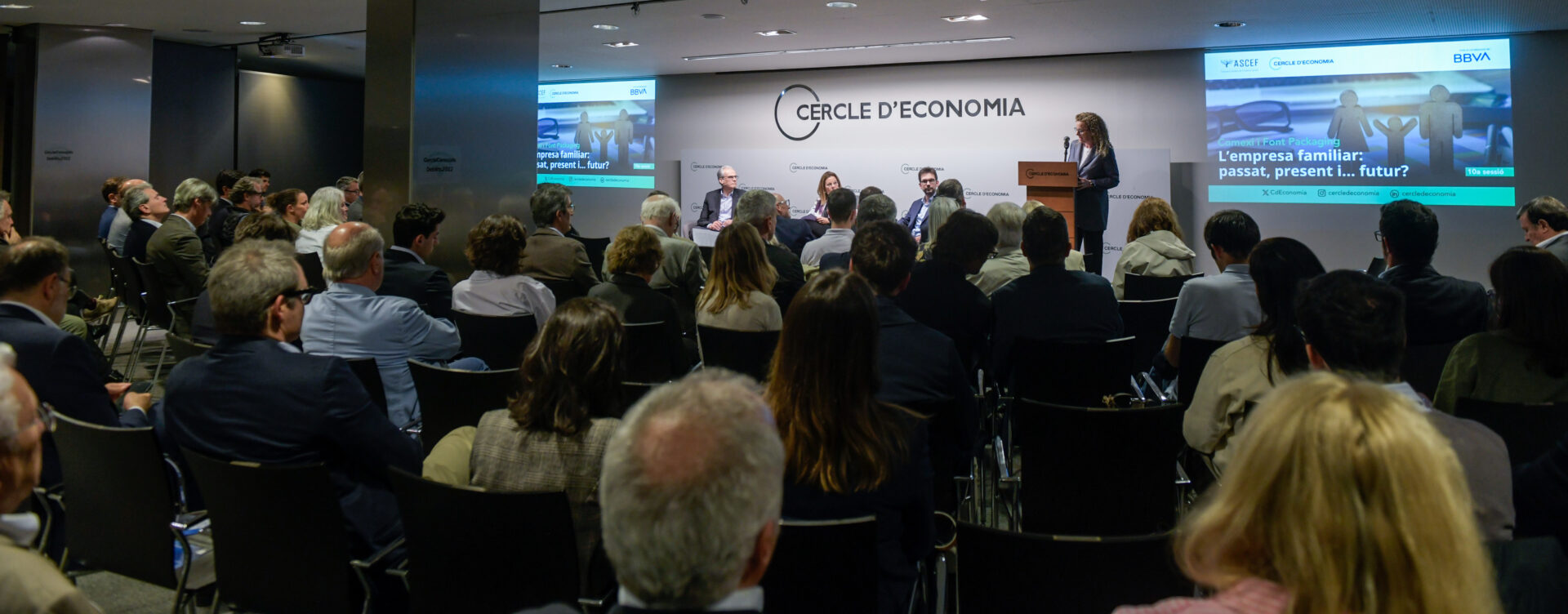
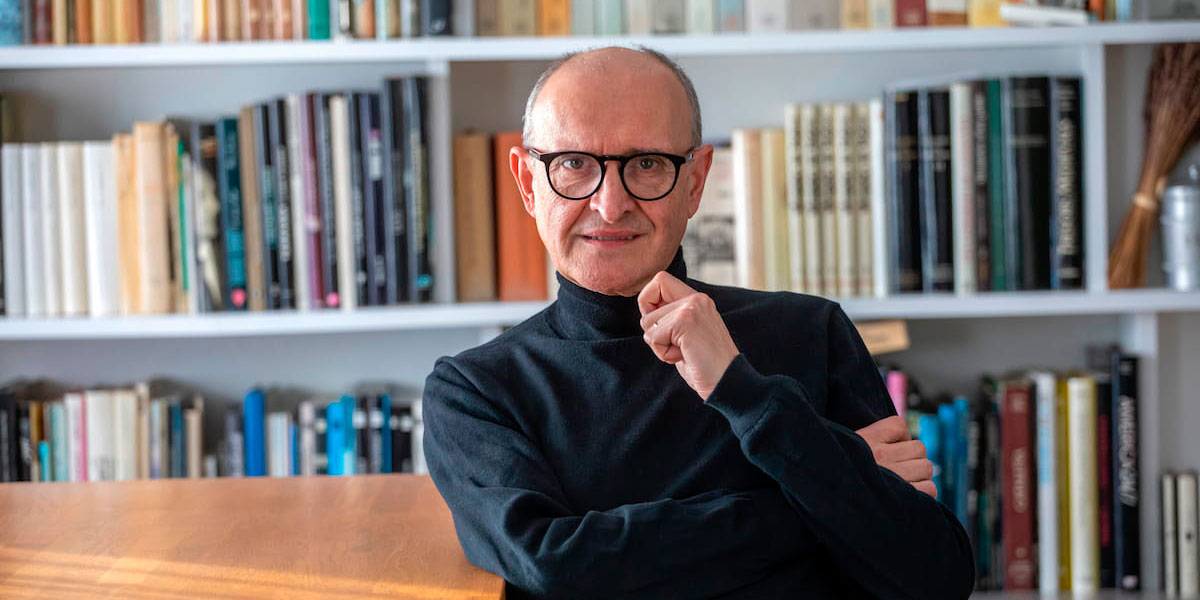
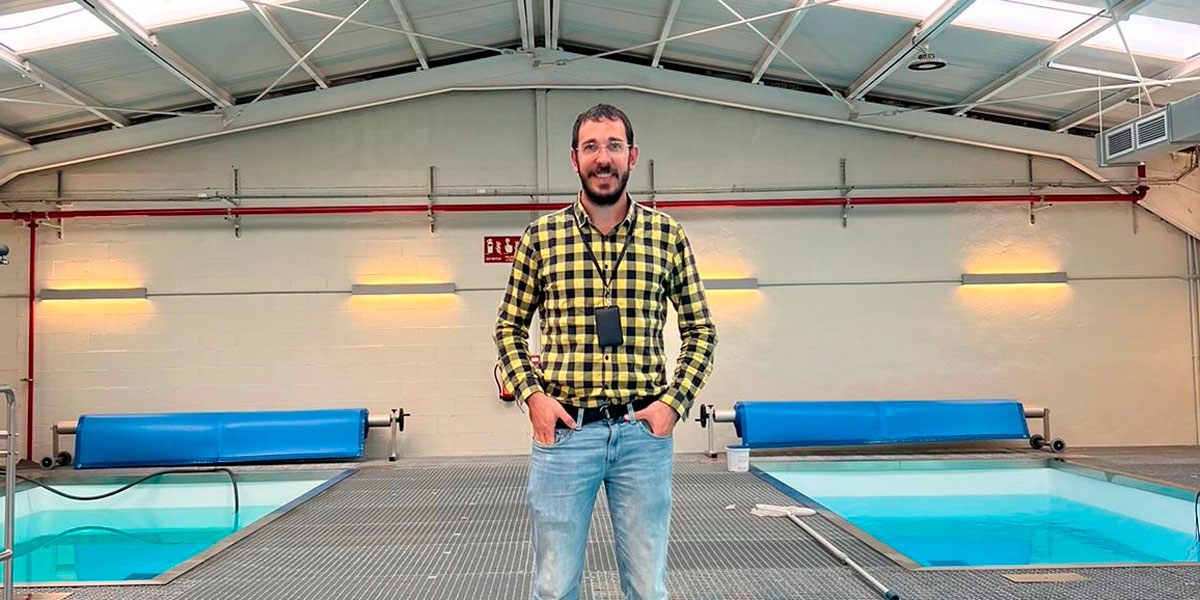
Martina Font and Pau Xifra, representing Font Packaging and Comexi, family owned industrial companies and INDPULS members, were the guest speakers at the 10th session of the Cercle d’Economia Family Business Series. The session, moderated by Xavier Cambra, opened up a conversation on the value of family businesses, the lessons learned along the way and the future challenges of a business model deeply connected to its territory, its people and a long term perspective.
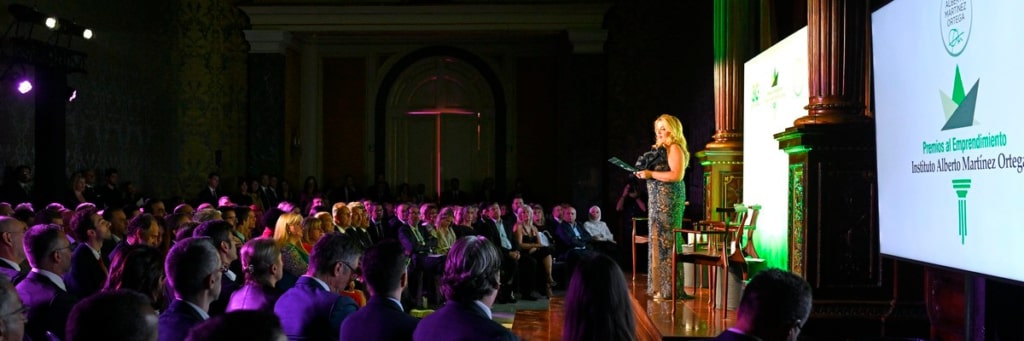
Under the title Family business: past, present and future, the session began with a welcome from Teresa Garcia Milà, on behalf of the Cercle d’Economia, and Eva Lluch, on behalf of the Family Business Series. Xavier Cambra introduced Martina Font and Pau Xifra and framed the purpose of the meeting. The conversation focused on sharing experiences, achievements and common challenges around continuity, governance and the evolution of family businesses.
Font Packaging is a family owned company specialized in corrugated cardboard packaging solutions, with an industrial track record defined by quality, innovation and sustainability. Comexi is a family owned company in the flexible packaging sector, specialized in printing, laminating, slitting and automation solutions for the flexible packaging industry.
From the very beginning of the conversation between Martina Font and Pau Xifra, one idea became clear. A family business is much more than an ownership structure. It is a way of understanding business, making decisions and building a distinctive culture over time.
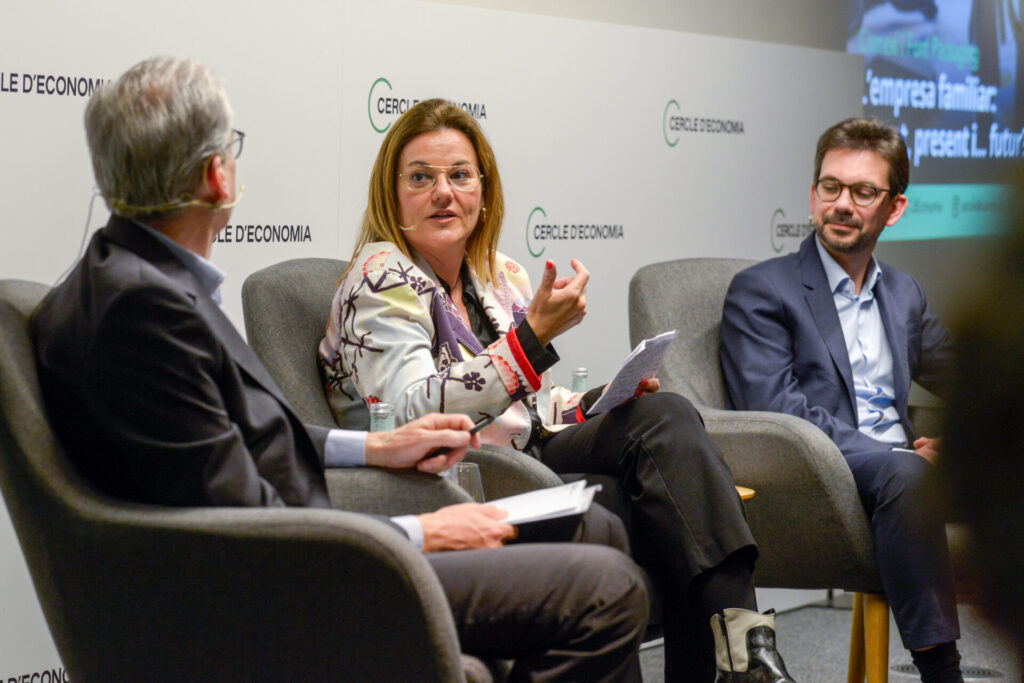
The value of industrial family businesses
Martina Font explained the story of her family and the company through concepts such as generosity, family culture, commitment, soul, enthusiasm and governance. In her account, family legacy does not appear as a static inheritance, but as an active responsibility that the three siblings have been able to interpret and update.
Pau Xifra began his intervention by speaking about his grandfather and the origins of Comexi, highlighting ingenuity, management and the importance of family protocols as elements that help structure continuity. He also emphasized simplicity, humility, people, values and commitment as essential factors for growing a company without losing its essence.
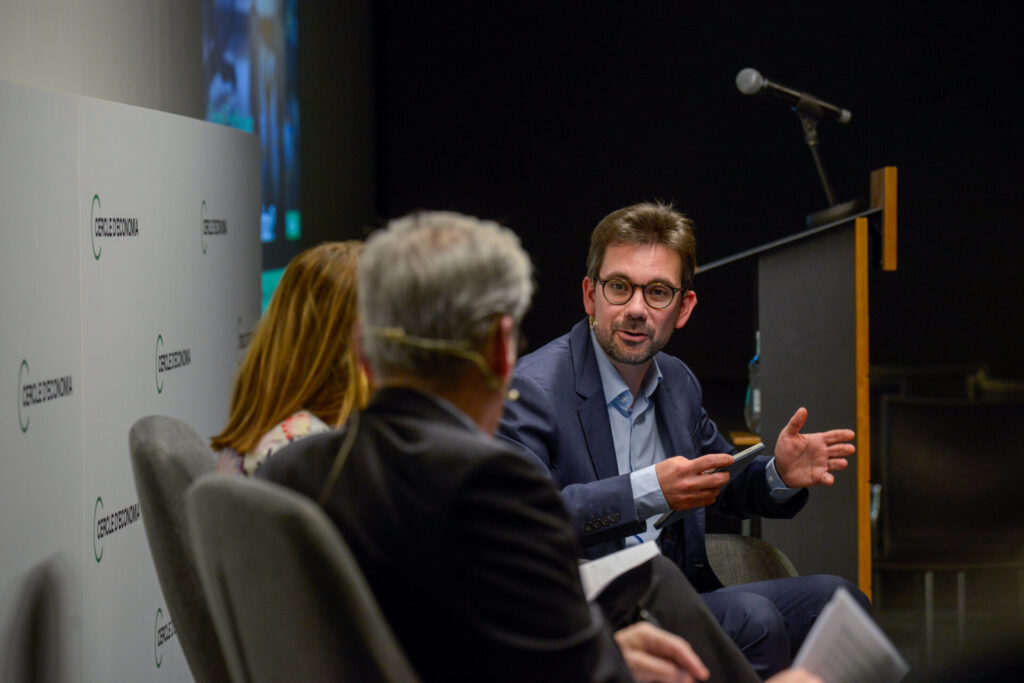
Governance and professionalization: key challenges
One of the central points of the conversation was the need to professionalize the family business without stripping it of what makes it distinctive. Both Martina and Pau agreed that growth, talent acquisition, stronger governance and adaptation to new markets require method, judgment and clear structures. At the same time, they stressed that this professionalization must preserve family culture, proximity to the territory and a sense of belonging.
This balance is especially relevant in the current context. Industrial family businesses face global challenges that directly affect their competitiveness, such as attracting and retaining talent, transferring knowledge across generations, achieving scale and business volume, internationalization and geopolitical complexity. These challenges require companies to combine long term vision with adaptability, and prudence with ambition.
Family business as a driver of innovation
The conversation was an inspiring space for all attendees and showed that family businesses can be drivers of innovation when they are able to turn their values into tools for the future. Continuity does not depend only on preserving what has been received, but on knowing how to transform it and make it evolve responsibly.
The future of the family business is not guaranteed by generational continuity alone. It is built through governance, professionalization, talent and a culture capable of adapting without losing its essence. This is a shared value among many of the family owned industrial companies that form part of the INDPULS ecosystem.
Similar Content