How Companies Innovate: Lessons for Industry
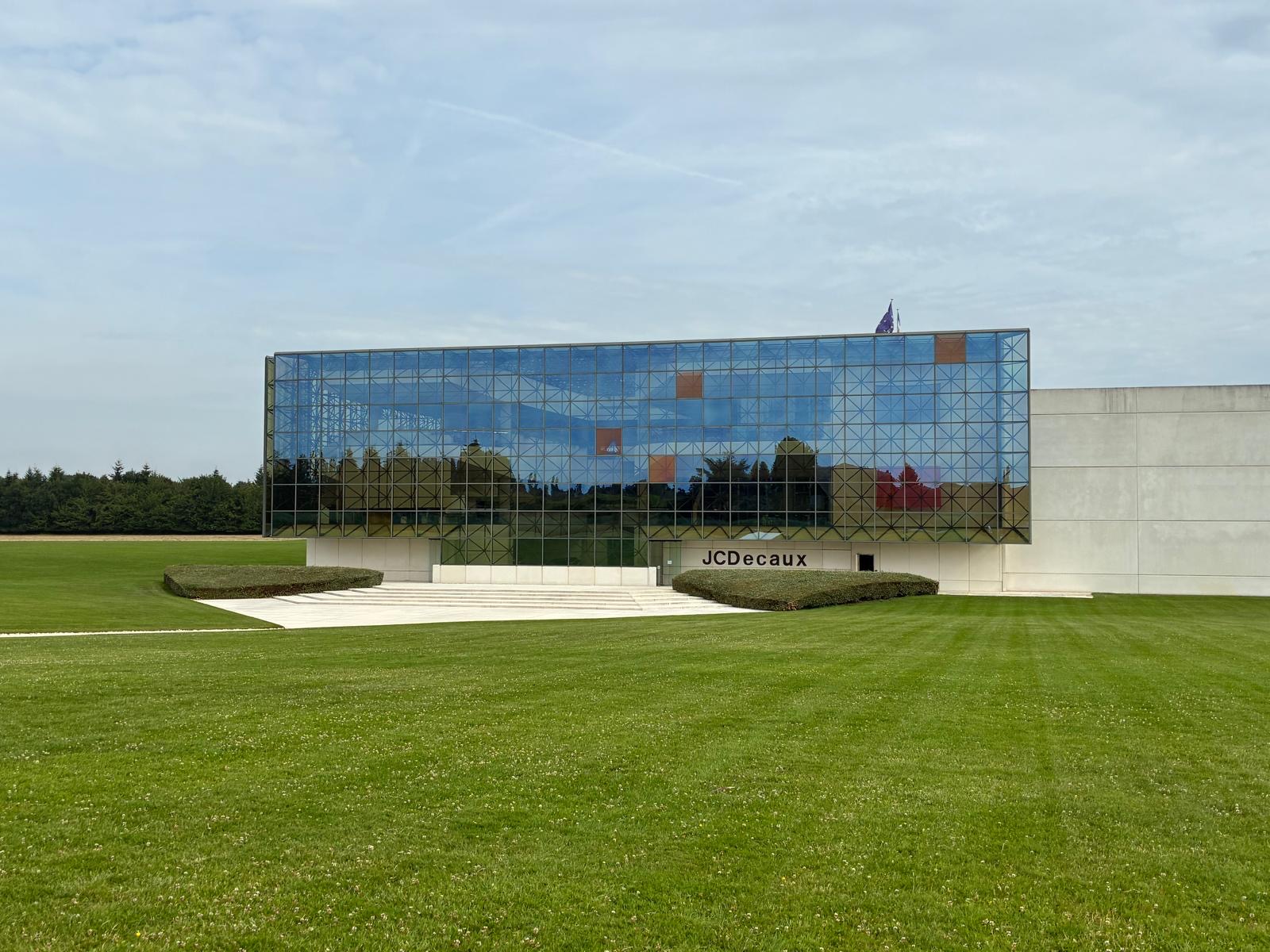
A collection of lessons from visits to JCDecaux, Groupe Partouche and Albéa: business models, modularity, sustainability, circular economy, AI, governance, training and open innovation.
International innovation missions allow us to observe how other organisations address challenges that are also present in industrial companies: incorporating new technologies, advancing sustainability, deploying artificial intelligence, evolving business models and preparing teams for change.
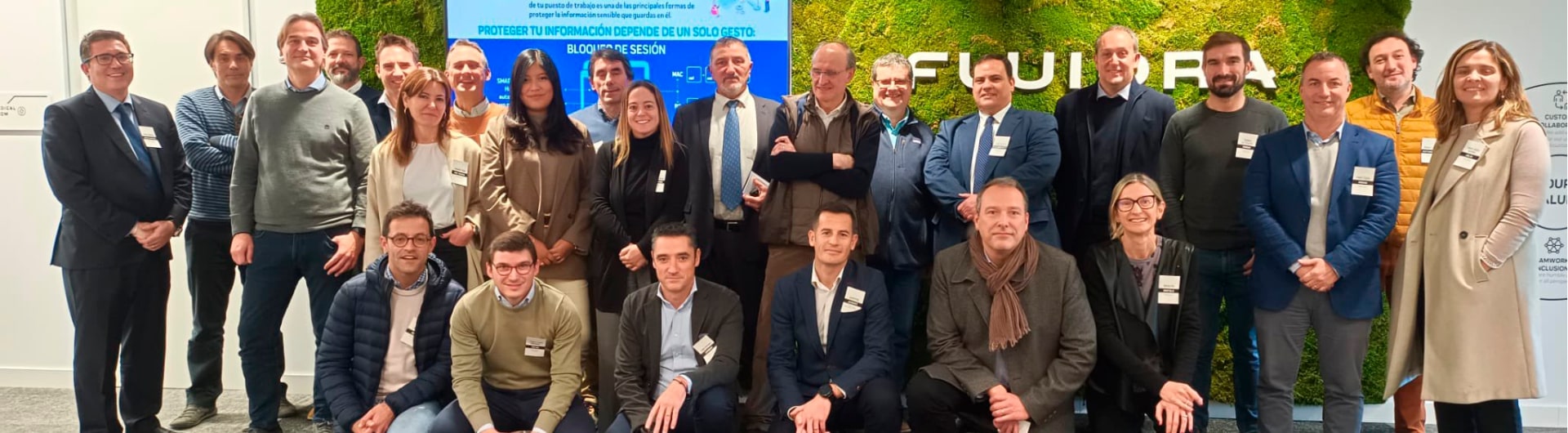
As part of the mission to Viva Technology organised by ACCIÓ, INDPULS took part in a Catalan delegation with companies and stakeholders from a range of sectors. Participants included Girbau Lab, Alsina Formwork, Hinojosa Packaging Group, Desigual, among others, companies from different sectors that bring complementary perspectives on the challenges facing industry.
Visits to JCDecaux, Groupe Partouche and Albéa allowed us to discover three different approaches to innovation: the transformation of urban services, the evolution of the customer experience in a traditional sector, and the cross-functional adoption of artificial intelligence in an industrial company. Rather than replicating specific solutions, the interest lies in turning these experiences into useful lessons for our companies.
1. Innovation is part of the business model, not just the product
JCDecaux does not define itself solely as an outdoor advertising company, but as an urban services company that integrates design, engineering, manufacturing, software, electronics, maintenance and sustainability. Its model consists of providing urban furniture to cities — bus shelters, information panels, public toilets and other services — financed mainly through advertising revenue.
This perspective broadens the scope for innovation. Value is not found only in the physical product, but in the combination of infrastructure, service, data, content, maintenance and the relationship with cities throughout the entire life cycle.
Groupe Partouche, a family-owned group linked to hospitality and entertainment, also approaches innovation through business evolution. In a traditionally conservative sector, it explores new gaming formats, immersive worlds and digital experiences to transform its relationship with customers. In Albéa’s case, innovation extends to manufacturing, supply chain, human resources, sales, marketing, legal and product development.
The first lesson is therefore cross-functional: innovation stops being an isolated initiative when it is connected to the way a company creates, delivers and captures value.
2. Designing today with the next twelve years in mind
The average duration of JCDecaux’s municipal contracts is around twelve years. This reality shapes all technological decisions: equipment must continue to operate, be repairable and be ready to evolve over a period that is much longer than the usual life cycle of a digital technology.
For this reason, the company rules out attractive but short-lived options, such as certain OLED screens, and prioritises modular LED technologies. The most spectacular solution does not necessarily win; the most reliable, sustainable and adaptable one does.
For industry, this way of making decisions is particularly relevant. In a context of accelerated technological change, it may be more important to design a product that is ready to be updated than to try to incorporate every available feature from day one.
3. Modularity is a business strategy
At JCDecaux, products are designed so that they can be repaired on site, only defective modules can be replaced, maintenance costs can be reduced and the useful life of assets can be extended. The shift from LCD panels to modular LED solutions has made it possible to reduce weight and consumption, simplify interventions and avoid complex operations involving cranes.
Modularity is not just a technical feature. It can change the relationship with the customer, reduce downtime, generate maintenance and upgrade services, and avoid replacing an entire piece of equipment when only one part has failed.
This approach can be extrapolated to many of the sectors represented at INDPULS: machinery, packaging, construction, equipment, materials or industrial solutions. Designing for repair, replacement and evolution can become a competitive advantage and a lever for circularity.
“The most advanced technology is not always the one that creates the most value. In industrial environments, reliability, repairability and the ability to evolve can be decisive.”
4. Sustainability is integrated into the development process
At JCDecaux, sustainability does not appear as a separate initiative, but as a criterion incorporated into design and operations. The company works with life-cycle analysis and has developed measures such as reusing 84% of the components of a bus shelter, patented systems that reduce electricity consumption by 50%, cleaning with rainwater, reducing water consumption in public toilets and optimising logistics.
A very significant part of the company’s carbon footprint corresponds to Scope 3 emissions, a situation shared by many industrial companies. This means acting beyond the company’s own operations and incorporating materials, suppliers, transport, maintenance and end of life into decision-making.
The lesson is not only to make more sustainable products. It is to integrate sustainability into the criteria used to decide whether to adopt a technology, design a component, configure a supply chain or plan maintenance.
5. The circular economy also depends on the supply chain
Manufacturing with recycled materials continues to be, in many cases, more difficult and more expensive than manufacturing with new materials. According to the experience shared by JCDecaux, the main obstacle is not always technological: it is the ability to find recycled materials with the necessary quality, volume and stability.
Faced with this difficulty, circularity can be activated through other means: remanufacturing, reuse, upgrading existing equipment and design geared towards future repairs. These practices can generate an impact before a fully circular supply chain exists.
For INDPULS, this reflection reinforces the need to approach circularity as a systemic and collaborative challenge. Solutions do not depend on a single company, but on coordination between manufacturers, suppliers, customers, material managers and technology stakeholders.
6. Innovation can combine technology, privacy and social impact
JCDecaux uses sensors, cameras, artificial intelligence and local data processing — edge computing — to develop urban services, while avoiding identifying individuals. Information is processed locally and only events or metadata are transmitted.
This design reduces cybersecurity risks, facilitates regulatory compliance and helps build trust. It is an example of how to incorporate privacy into the solution architecture, rather than treating it as a correction afterwards.
Many of the group’s innovations also seek to respond to urban challenges: climate shelters, solar misting systems, shaded spaces, urban biodiversity, furniture adapted for older people and more accessible fountains. Technology is thus linked to a specific social need.
7. Artificial intelligence is better adopted through specific use cases
Albéa approaches artificial intelligence as a long-term transformation process. The journey began with industrial digitalisation initiatives, data analytics and computer vision for quality control, and has evolved towards generative AI, intelligent assistants and agents integrated into business processes.
The initiatives start from very specific needs: increasing productivity, improving quality, reducing administrative tasks and facilitating decision-making. AI is not presented as a technology to experiment with, but as a tool that must solve an identifiable problem.
One of the most illustrative cases was developed for the sales team. After a visit, the professional can record the conversation and the AI generates the minutes, summarises them, translates them if necessary, allows confidential internal notes to be added and records the structured information directly in the CRM. The result is less administrative time, better data quality and improved customer follow-up.
For INDPULS, this example confirms the value of sharing clearly defined use cases, with demonstrable impact and connected to real processes. These are the cases that help other companies imagine how they could be applied and accelerate adoption.
8. Technology needs training, governance and security
The success of AI depends as much on people as on technology. Albéa has rolled out a progressive webinar programme so that employees can learn to use it in everyday tasks: writing emails, preparing technical documentation, translation, reviewing contracts, generating images, creating content or summarising meetings.
The deployment is complemented by a secure architecture based on Azure, data protection mechanisms, access controls, content filtering, usage monitoring and a cybersecurity strategy aimed at preventing risks such as information leakage or prompt injection attacks.
Transformation therefore requires a balance between technology, governance and training. Buying a tool is not the same as deploying it. It is necessary to define who can use it, with what data, for which processes and under which rules.
9. Open innovation enables faster progress
JCDecaux does not aim to develop all the technologies it needs internally. It collaborates with startups, screen manufacturers, technology centres and companies within the ecosystem, including members of Software République, such as Renault, Atos, Thales and Orange.
Groupe Partouche also works with external players, such as HABS, a startup linked to the Paris-Saclay ecosystem that analyses behaviour and interactions between people and machines. Through non-invasive sensors, it interprets brain activity so that AI can better understand a person’s cognitive state.
This openness provides access to specialised knowledge and enables companies to explore areas that would be difficult to develop on their own. It also requires the ability to formulate challenges, select partners, govern data and build collaborative relationships that go beyond a one-off pilot.
10. The biggest obstacles to innovation are not always technological
Some of the most important challenges identified during the visits are related to regulation, public tenders, permits, connection to the electricity grid, market acceptance or change management. A technology may be ready and, nevertheless, unable to be deployed.
This observation is particularly relevant for industry. Innovating means acting on a complete system: technology, processes, people, regulation, economic model, infrastructure and value chain.
That is why the most advanced companies do not simply accumulate projects. They build organisational capacity to turn them into real adoption.
Sharing lessons to accelerate adoption
The visits confirm the value of the INDPULS model: industrial companies sharing experiences, challenges and knowledge to move forward together. Use cases, mistakes, barriers and the return obtained can be more useful for accelerating innovation than a general description of the technology.
The opportunity for INDPULS is to continue structuring this exchange: which solutions have been tested, what has worked, what has prevented them from scaling, how the organisation has been prepared and what impact has been achieved.
Observing how other companies innovate is not about copying them. It is about reviewing our own questions: are we designing to evolve? Is sustainability part of strategic decisions? Do we have the governance model needed to scale AI? Are we training our people? Do we know which capabilities we need to build internally and which we can incorporate through the ecosystem?
It is in this ability to turn observation into shared learning that an international mission can generate real value for industry.
Similar Content