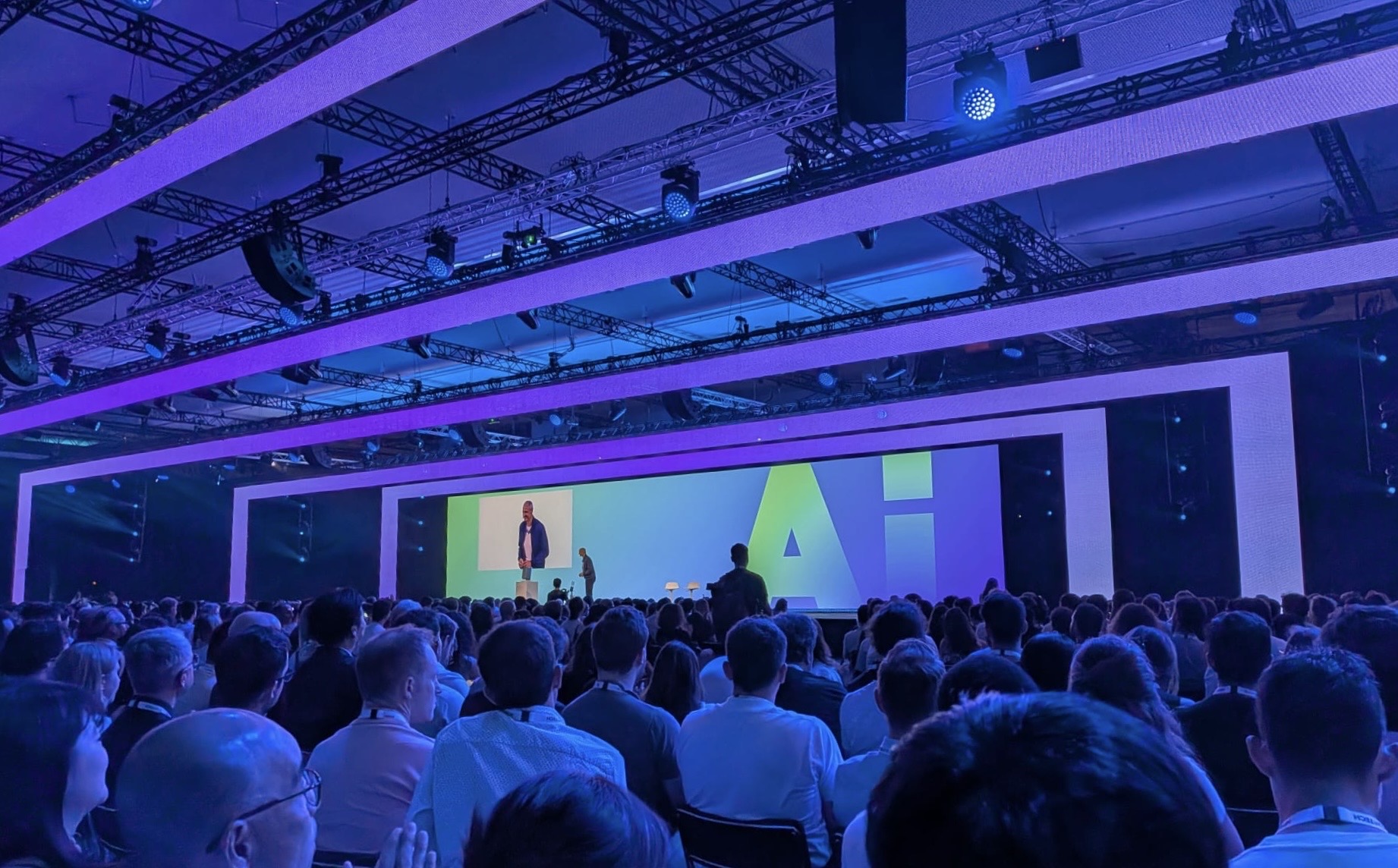
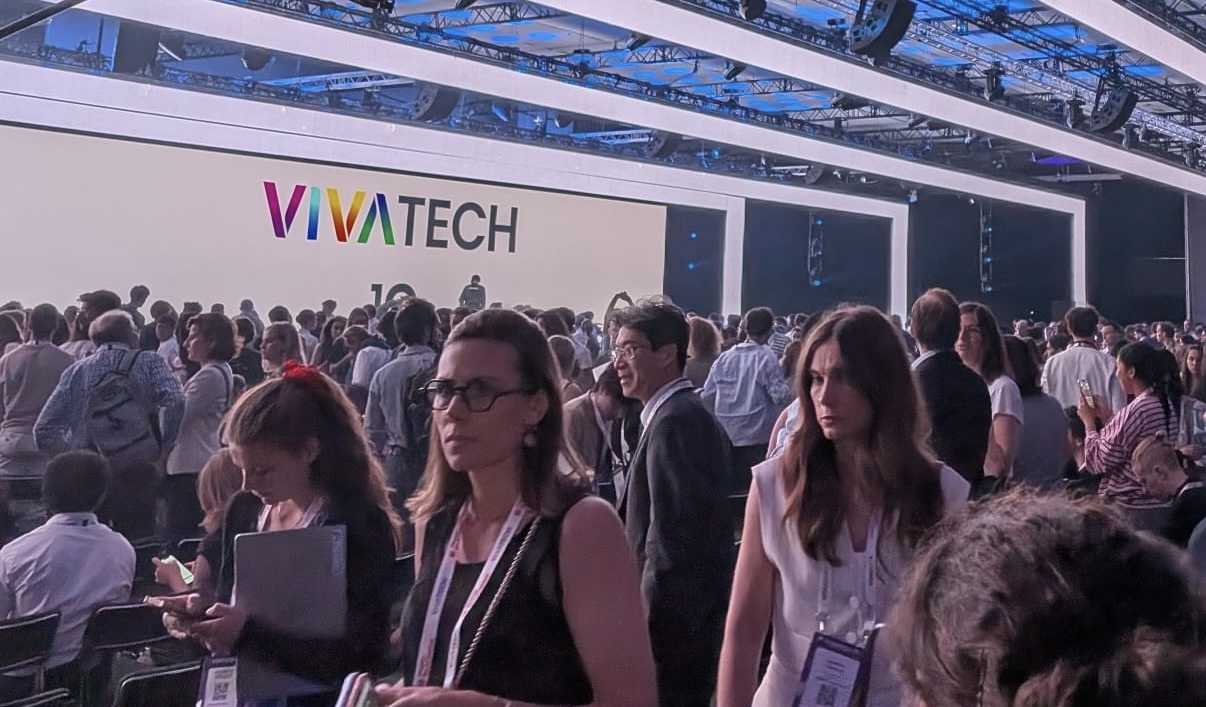
INDPULS at Expo FoodTech and Food 4 Future World Summit
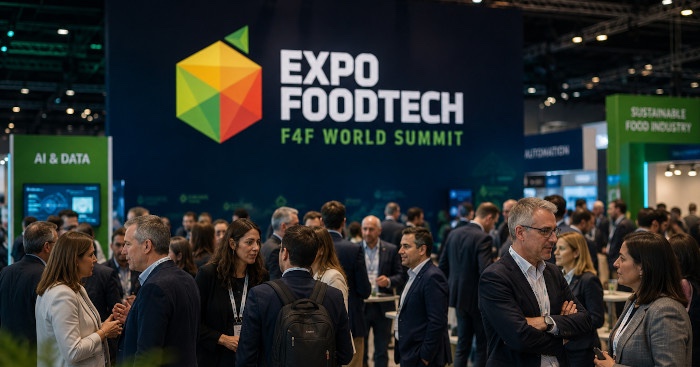
Innovation, disruption and new leadership to transform the food industry
The INDPULS team attended Expo FoodTech and the Food 4 Future World Summit, one of Europe’s leading events to discover emerging technologies, the most innovative solutions, and the trends shaping the future of the food and beverage industry.
During the day we attended two round tables entitled “CEO’s facing disruption. Innovation in the food sector”, with CEOs and leading managers from the food sector. Based on their experience, we were able to learn how the main companies in the sector are addressing innovation, sustainability, the impact of AI, new consumption habits and the need to adapt more quickly to market changes.
The sessions, moderated by Javier Dueñas, CEO of Campofrío, and Ignacio Silva, president of FIAB, brought together voices from companies such as Kellanova, Nestlé Iberia, Deoleo, Nueva Pescanova, Angulas Aguinaga, Ferrero Ibérica, Danone Iberia and Unilever España. A high-level agenda to understand where the sector is evolving and what capabilities will mark competitiveness in the coming years.
Listen better to the consumer and anticipate with data
One of the most repeated ideas was the need to listen to the consumer in a deeper and more relevant way. It is no longer just about having data, but knowing how to interpret it, connect it with business decisions and transform it into products, services and models more adapted to new demands.
Susana Entero, General Manager of Kellanova, emphasized the importance of anticipating the consumer and transforming the business towards what the market demands: more sustainable, healthier products aligned with new consumption habits.
In the same vein, Jordi Llach, CEO of Nestlé Iberia, emphasized the need to receive data, treat it appropriately and listen to the consumer in a meaningful way. Data only generates value when it helps to better understand real needs and make more informed decisions.
Agility and disruption
Disruption is no longer an exception. It is part of the competitive context. Changes in raw materials, geopolitical tensions, new consumer habits, regulatory pressure and technological transformation force companies to be much more agile.
Cristóbal Valdés, CEO of Deoleo, recalled that some basic principles remain essential, but that today we need more speed, closer proximity to the consumer and a more agile relationship with the distribution chain.
From Nueva Pescanova, Jorge Escudero shared an idea that is particularly relevant for any company in transformation: to transform the business, you must first transform the company. Innovation, quality and data integration are key levers, but they only work if the organization is able to decide and adapt quickly.
The importance of being prepared to react in crisis situations was also brought up. The example of the impact of the Ukrainian war on sunflower oil highlighted the need to develop responsiveness, streamline decision-making and adapt recipes, processes and operational models without losing competitiveness.
Artificial intelligence as an accelerator, not a substitute
AI occupied a central part of the conversation. Companies are already incorporating it in areas such as marketing, demand planning, production, quality, influencer selection, commercial segmentation and operational efficiency.
Nestlé highlighted the value of real-time information and the ability to obtain immediate results on marketing campaigns. Kellanova explained applications in demand planning, commercial and marketing, always with the idea that AI does not replace decision-making, but does speed up processes.
Deoleo shared a very relevant approach: start by forming teams, reduce fear and open spaces for projects and proposals to emerge. Before building large use cases, it is necessary to generate trust and allow people to discover what they can do with technology.
Nueva Pescanova pointed out that AI is a transversal tool that already helps them in production, quality and efficiency. Applications linked to the more efficient use of fertilizers were also mentioned, with the ability to detect where they are needed and where they are not.
The conclusion is clear:
“AI must help them make better decisions, operate more efficiently and free up their capacity to think, innovate and create value.”
Sustainability and relationship with origin
Sustainability appeared as an inseparable dimension of innovation. Especially in a sector where the impact of the value chain is very relevant.
Nestlé highlighted that a very significant part of emissions comes from ingredients, which requires working directly with farmers and ranchers. Without transforming the origin, there is no real transformation.
The need to change the relationship with producers was also discussed. In the case of Deoleo, the evolution of the relationship model with farmers and the importance of building more stable, close and shared value-oriented links was highlighted.
Sustainability is no longer a line of communication to become a question of production model, supply chain and future competitiveness.
New leadership for a more dynamic industry
The two roundtables agreed on one essential point: transformation does not depend only on technology. It depends mostly on leadership, culture and people.
Kellanova spoke of a leadership that is present, close, agile, flexible and courageous. Nestlé focused on transparency and authenticity, with examples of internal proximity such as spaces for direct conversations with teams. Deoleo highlighted the recognition of legacy, example, humility, proximity and service. Nueva Pescanova emphasized responsibility, the empowerment of teams and the importance of letting people make decisions and learn.
In the second panel, moderated by Ignacio Silva, Danone defended curiosity and enthusiasm as key capabilities for the future. Ferrero Ibérica valued experience, intuition, diversity and close leadership. Angulas Aguinaga summed it up with two very powerful concepts: courage and humility. The need to know how to give up in order to focus on what really matters was also emphasized.
In an environment of accelerated change, companies need leaders capable of combining speed and discipline, vision and execution, technology and human judgement.
Innovating also means turning restrictions into opportunities
María González-Mesones, General Manager of Unilever Spain, put on the table a particularly interesting idea: turning regulatory challenges into opportunities for innovation.
In this context, the potential of sandboxes as a tool to facilitate innovation in the agri-food sector was highlighted. Regulated, controlled and learning-oriented spaces can help companies test new solutions, reduce uncertainty and accelerate the arrival of new proposals to the market.
Learning for INDPULS members
INDPULS’ visit to Expo FoodTech and Food 4 Future World Summit leaves us with several relevant conclusions for the entire industrial ecosystem.
1.- Innovation must be connected to the consumer, but also to the origin, the supply chain and the operating model.
2.- Data and AI only generate impact when integrated into the company’s decision-making culture.
3.- Sustainability can no longer be treated as a separate dimension. It is part of competitiveness, risk and the value proposition.
4.- The speed of change requires organizations that are more agile, more flexible, closer and more capable of learning.
5.- The future of the food industry will depend on both technology and the quality of leadership. In a context of uncertainty, the companies that best combine courage, humility, focus and execution capacity will be the ones that will have the most capacity to transform and grow.
At INDPULS, visiting forums such as Expo FoodTech and Food 4 Future World Summit allows us to contrast challenges, identify opportunities and strengthen the shared vision of the future of the industry.
Similar Content